
Understanding and Remembering: Our Battlefields Trip
Today, the whole school came together to observe the two-minute silence for Remembrance.
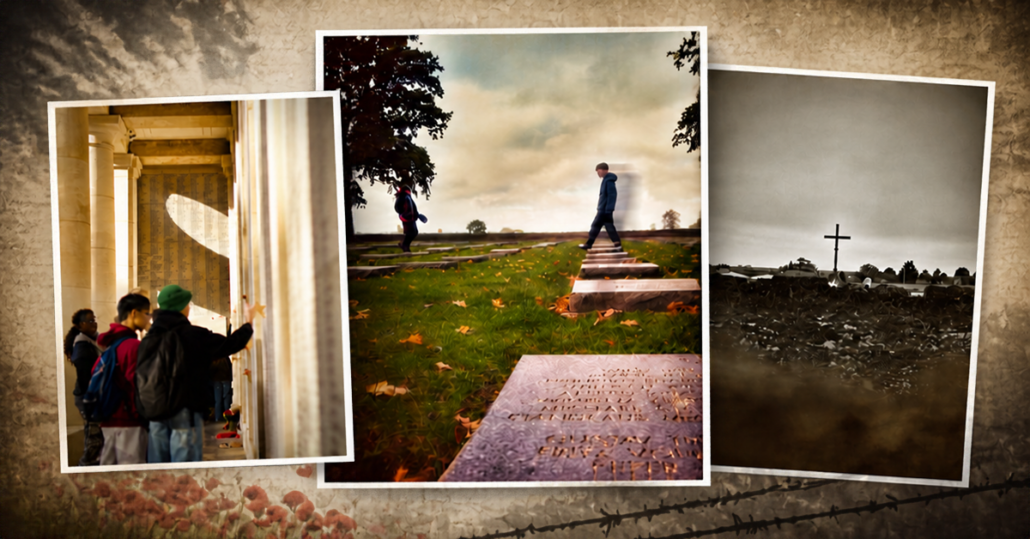
For Years 9–11, it followed closely on their trip to the Battlefields of France and Belgium, taking them through some of the most significant landscapes of the First World War.
One Year 10 pupil reflected:
“What struck me most was how quiet it was. You learn the numbers and the battles in class, but standing among the graves made it feel completely different. Seeing the names, and how young so many of them were, made the history feel much more real. It was strange to think that these peaceful fields had once been the centre of something so terrible.”
History has an unusually important place at Heritage, with every pupil studying the subject throughout their entire time at the school. From the Junior years, pupils begin building their own Book of Centuries: a growing chronological record into which historical events take their place alongside the writers, artists, scientists and composers they encounter elsewhere in the curriculum.
The aim is not simply to accumulate facts, but to develop a coherent sense of the living past: how events connect, and how the world we inhabit has been shaped by lives and choices long before our own.
So our pupils arrived at Arras and Ypres with a framework already in place: dates, people, consequences and chronology. Standing at Thiepval or among the graves at Tyne Cot does not replace that knowledge; it gives it scale, place and human particularity.
Dates and battles become landscapes. Numbers become names. Knowledge becomes something that can be contemplated, questioned – and remembered.
And that distinction matters. We want pupils not only to understand the past intellectually, but to recognise that some parts of the past make a claim upon our memory.
For pupils who had so recently returned from Château d’Ebblinghem and the battlefields beyond, today’s two-minute silence carried an added immediacy. In those places, they had stood in what the French call ‘lieux de mémoire’ – places where history is not only understood, but remembered.
To understand the past carefully, and to remember it well: both matter.
With thanks to George (Year 10) and Edward (Year 11) for providing some of the photographs accompanying this article.

